
 Язык
Язык
 English
 русский
 한국어
한국어 Deutsch
Отправить отзыв
Новости
 ГЛАВНАЯ / Новости / Новости отрасли / Built-In Power Strip Buying Guide: Specifications, Safety Features, and Installation Tips
 Built-In Power Strip Buying Guide: Specifications, Safety Features, and Installation Tips
 2026.09.09
 Новости отрасли
The kitchen island in a newly renovated home already has an embedded power strip, but the first morning you plug in a kettle, a toaster, and two phone chargers, the design flaw becomes obvious: not enough outlets, and the USB ports are too slow. That is the problem with choosing a built-in power strip based on looks alone. The right decision starts with how the strip will be installed, what it needs to power, and which protective features are non-negotiable. In this guide, the practical conclusion comes first: pick the outlet count and current rating before the finish, then verify protection and material performance.
Контент
- 1 What Really Defines a Built-In Power Strip
- 2 Four Specification Checks Before You Buy
- 3 Material Choice Determines Long-Term Reliability
- 4 Protection and Safety Features to Look For
- 5 USB Ports: Convenience With a Catch
- 6 Installation Considerations for Different Surfaces
- 7 Matching Configuration to Use Case
- 8 A Practical Purchasing Sequence
What Really Defines a Built-In Power Strip
A built-in power strip is not a special category of electronics. It is a standard power distribution unit designed to be recessed or flush-mounted into a surface. The term describes the installation method, not the internal circuitry. Built-in models are used on desks, kitchen islands, conference tables, and even floors. The core specifications remain the same as a regular power strip: outlet count, current rating, socket spacing, and whether the unit includes USB ports or individual switches.
The advantage of a built-in model is that it removes clutter and prevents cables from hanging across surfaces. The risk is that once installed, replacing or upgrading a poorly chosen unit is difficult. Every specification must be confirmed before the cutout is made.
Four Specification Checks Before You Buy
A built-in power strip sits in your furniture or wall for years, so the evaluation process should focus on the details that cause frustration after installation.
- Current rating and power demand: European standard sockets are typically rated 16A and 250V. For a kitchen island where a kettle, toaster, and coffee machine may run at the same time, add the wattage of every device. If the total exceeds 3,680W, the strip will trip repeatedly or risk overheating.
- Socket spacing and plug compatibility: Power adapters and oversized plugs often cover adjacent outlets. A strip with plugs spaced farther apart or angled socket layouts can prevent a single bulky transformer from blocking an entire row.
- USB port output: Many buyers assume any USB port is enough for phone charging. A port that delivers only 5V/1A will charge slowly. A useful built-in strip for a desk should provide at least 5V/2.4A per port, or support the fast charging protocols common in your region.
- Cutout size and installation depth: The strip must fit the surface thickness and the space behind it. Check the frame dimensions, the required cutout depth, and whether the cable exits through a specific side. Getting these measurements wrong makes the unit impossible to secure.
Material Choice Determines Long-Term Reliability
The housing material of a built-in power strip is more important than the color. The two plastics used most often are PC and PP. Polycarbonate offers better heat resistance and flame retardancy, which is the most relevant property for a strip installed inside a wooden desk or cabinet. Polypropylene resists chemical aging but is less effective at containing heat under sustained load.
If your application involves continuous high power, an enclosed cabinet, or significant heat sources, PC is the safer choice. This is not a marketing claim; it is a measurable material property. The relationship between heat resistance, fire resistance, and flame retardancy in PC material power strips is covered in detail in our technical article on PC material flame retardancy .
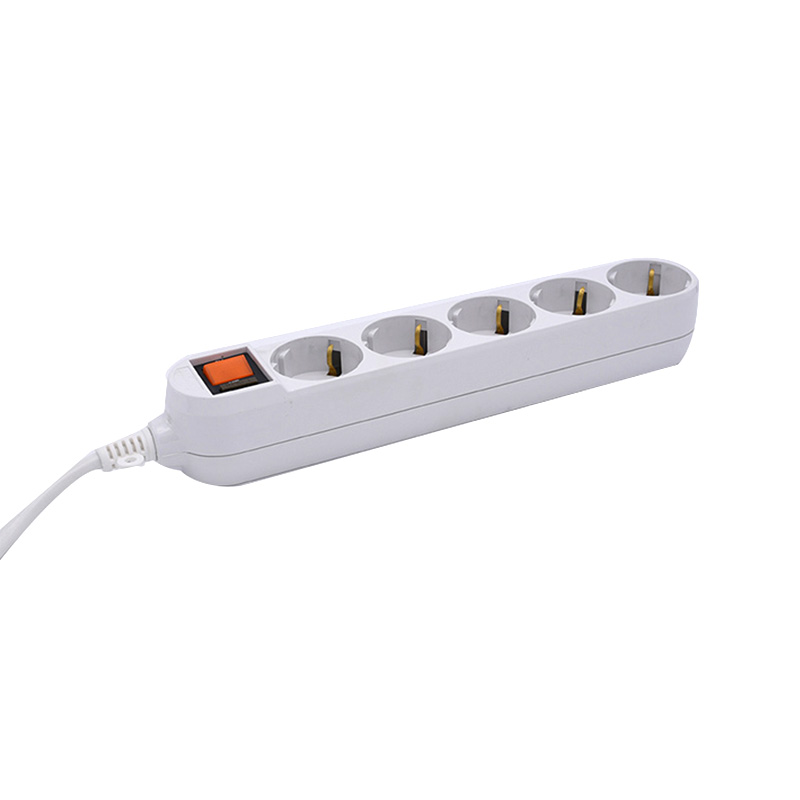
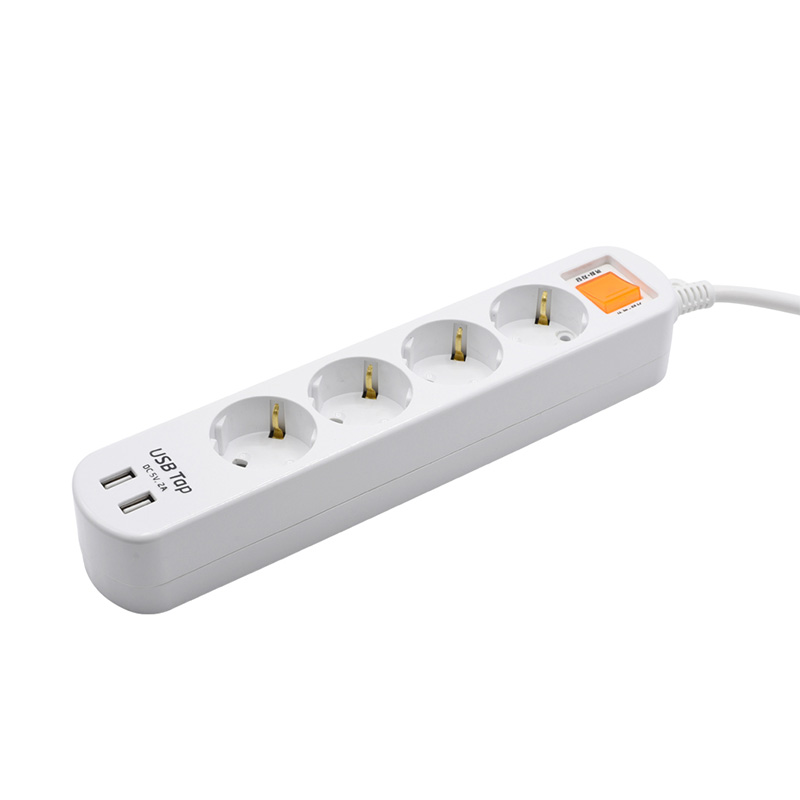
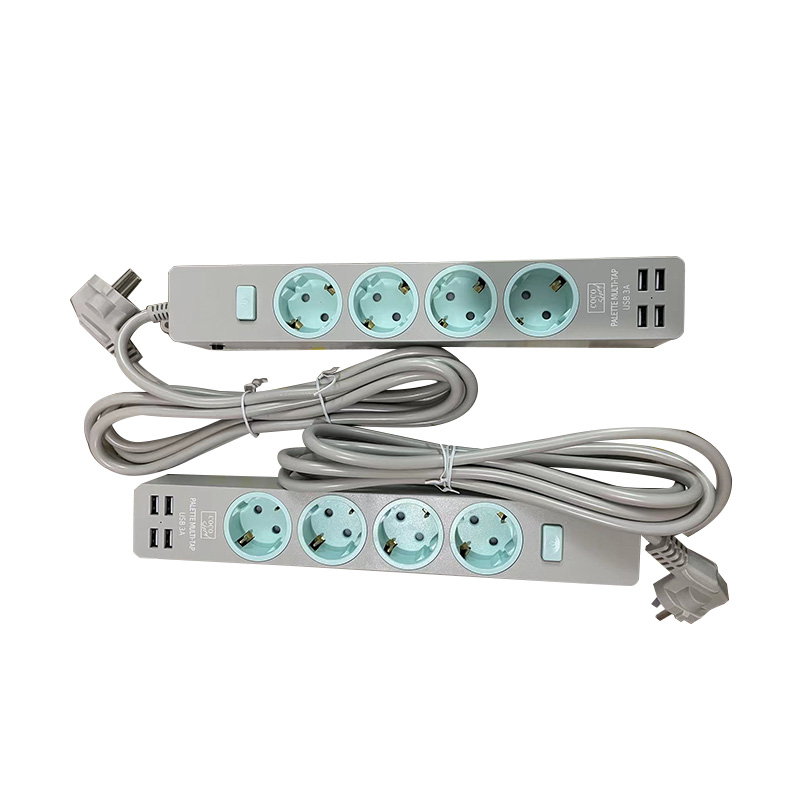
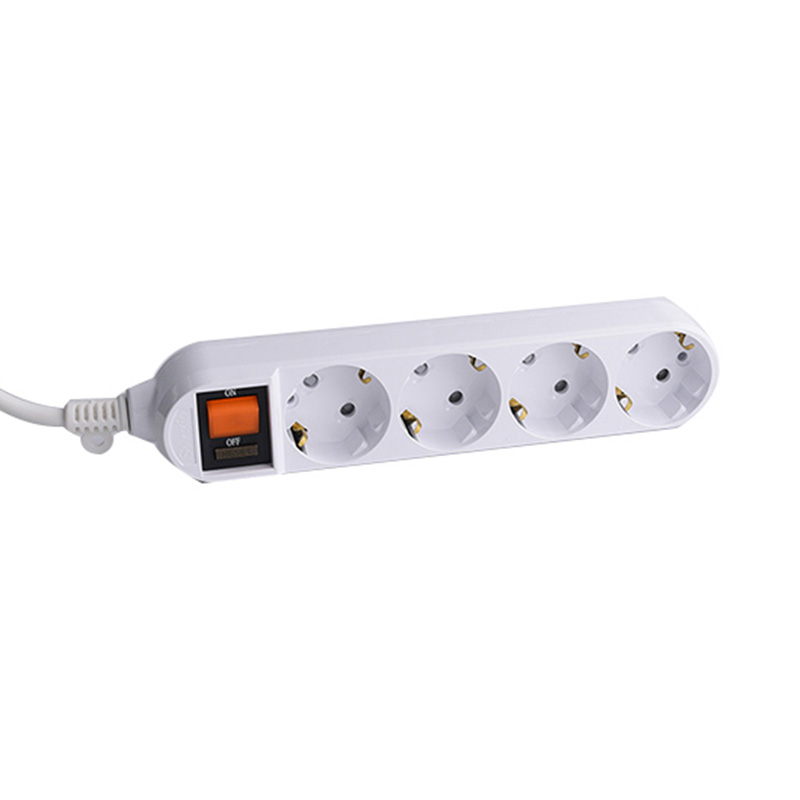 4-Outlet EU Power Strip with Overload Protection and PC Shell This model offers four EU outlets with a 16A rating and built-in overload switch, plus a flame-retardant PC body. Its copper wiring ensures stable power delivery, making it a solid choice for high-power permanent installations. View Product →
 Protection and Safety Features to Look For
A built-in power strip cannot be unplugged easily, so built-in protection is not optional for permanent installations. A reliable configuration has at least three protections: overload protection, individual on/off switches, and proper grounding. Overload protection cuts the circuit when the total current exceeds the rated value. Individual switches allow a single unplugged device to be isolated without disrupting the rest of the strip. Grounding is the baseline requirement for any appliance with a metal body or a three-prong plug.
The two features that matter most for built-in use are overload protection and an independent switch for each socket, because they let you stop a single device from drawing power when it is not in use. You can also learn about how a power strip detects and reports fault information in a technical article on self-diagnostic and fault reporting functions .
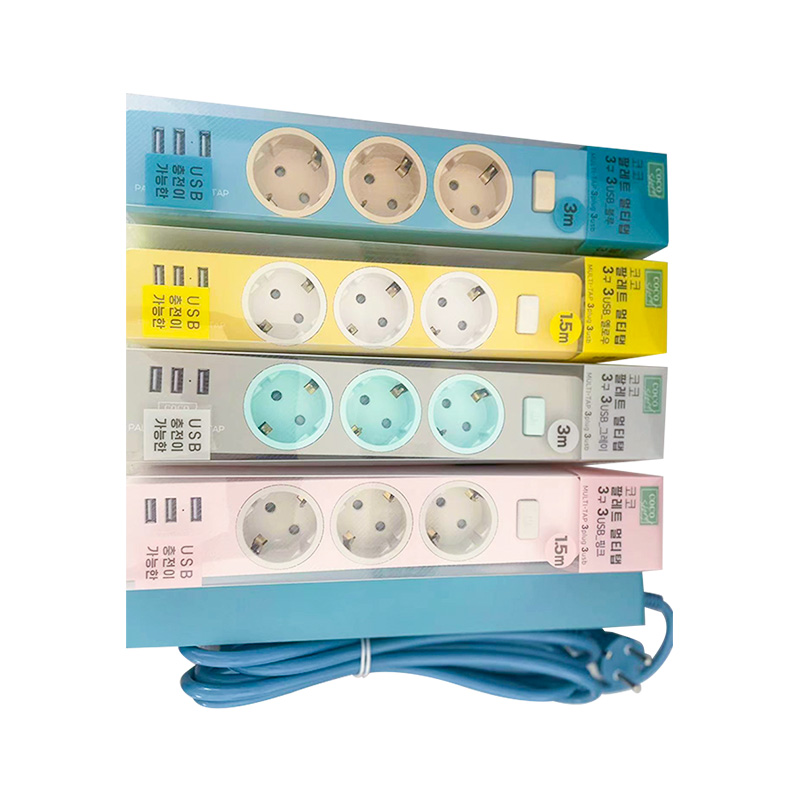
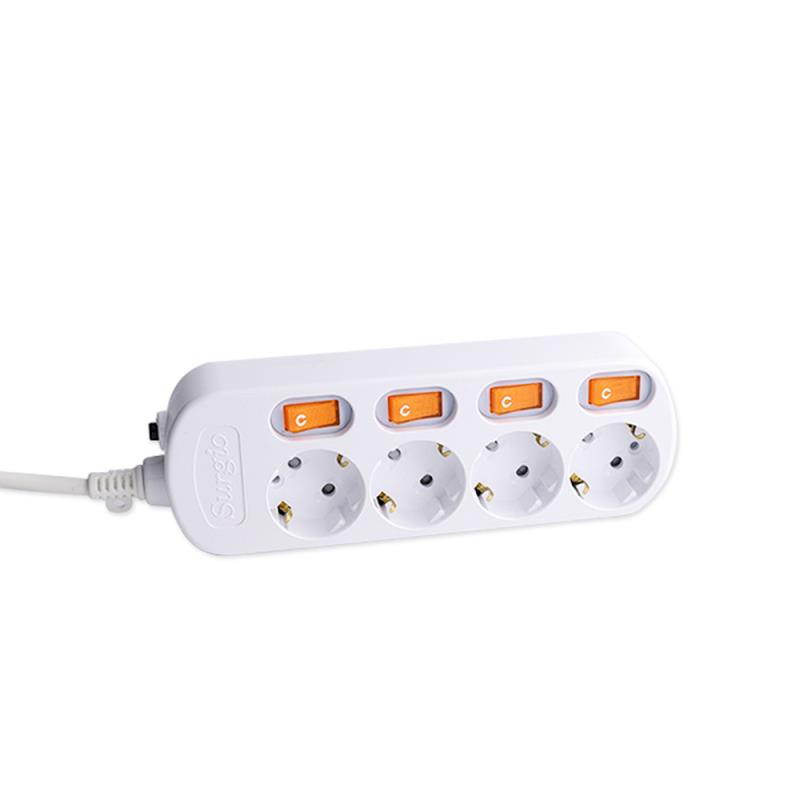 4-Outlet EU Power Strip with Individual Switches and Overload Protection Each of the four outlets has its own switch, allowing separate control, while the added overload button enhances safety. The fireproof PC shell and durable copper internals suit built-in use where independent shutdown is key. View Product →
 USB Ports: Convenience With a Catch
USB ports on a built-in strip are convenient for desks and bedside tables, but they create a hidden cost: a faster USB module increases the internal complexity and the price. If you only charge a phone and a tablet, two modest USB ports are enough. If you power a laptop, a speaker, and a battery bank, the required output per port will be higher.
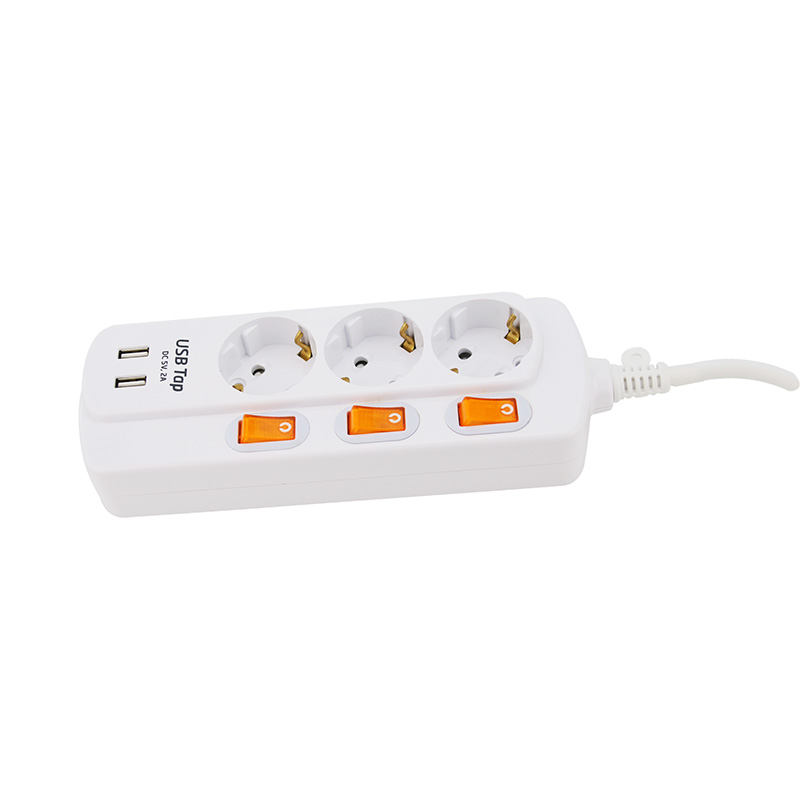
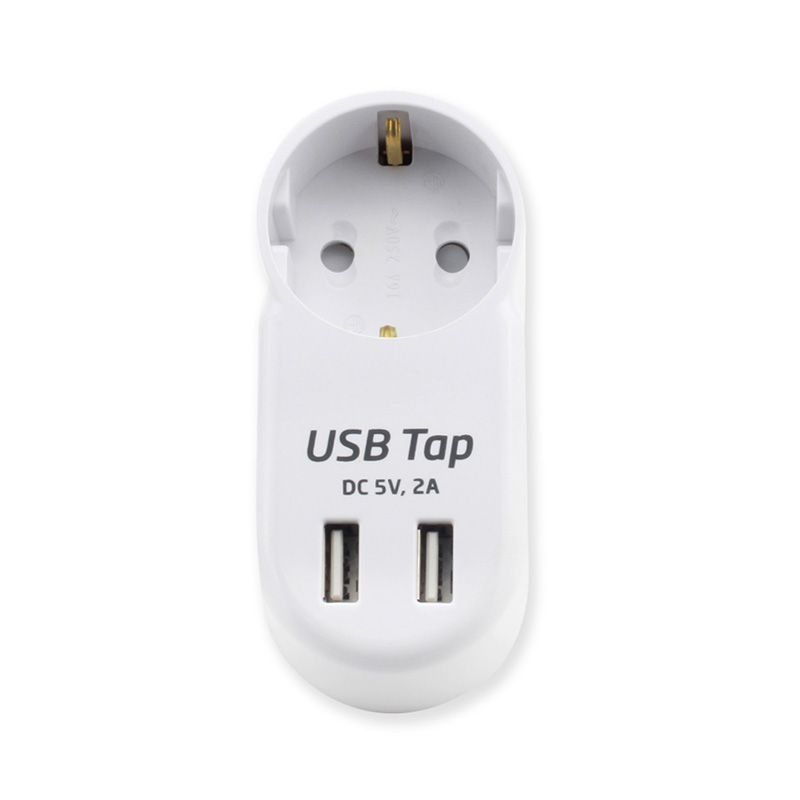
For a kitchen island or a study desk, a strip that combines outlets with two USB ports and individual switches handles the typical mixed-load scenario without wasting outlet space. One good option is a 2-outlet EU standard socket with two USB ports and two individual switches, which allows the USB ports to remain active without turning on a built-in device.
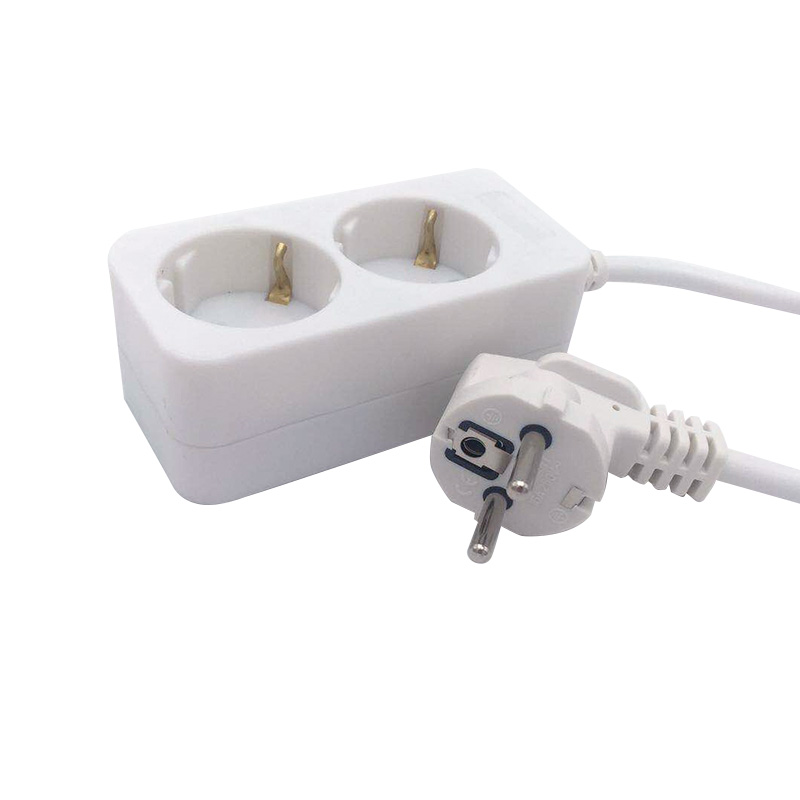
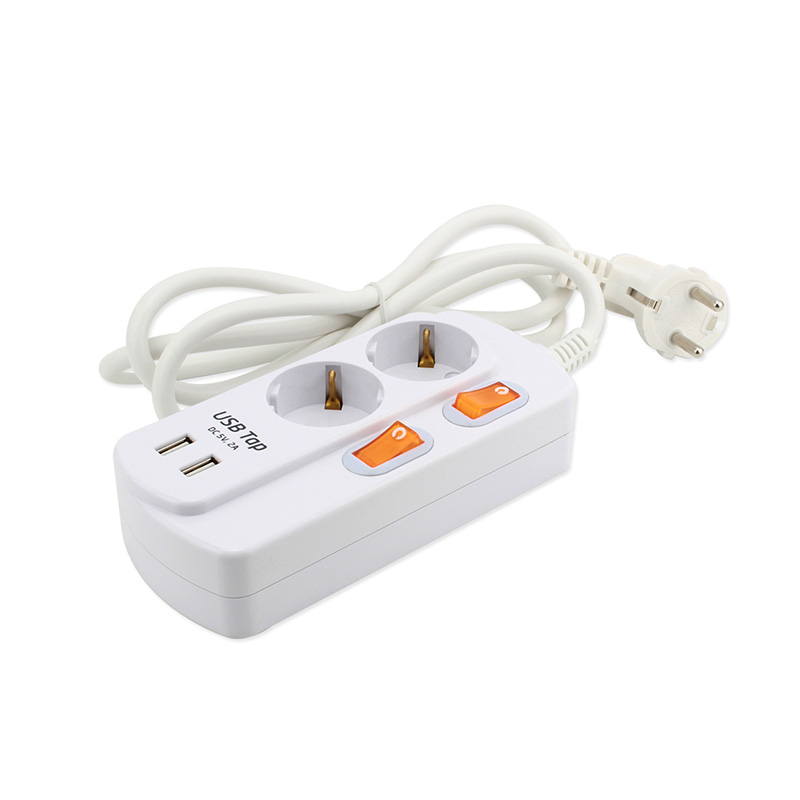 2-Outlet EU Power Strip with USB Ports and Individual Switches Two AC outlets and two USB ports, each with independent switches, provide flexible charging and device control. Its 1.5m cable and flame-retardant PC shell make it practical for desks or kitchen islands with mixed loads. View Product →
 Installation Considerations for Different Surfaces
The surface where the strip is installed changes the installation plan. In a desk, the most common mistake is failing to leave enough cable space behind the panel. A built-in strip needs at least 40mm of clearance for the cable connector to exit without being pinched. In a kitchen island, the strip must be positioned away from the sink and the cooking surface, but close enough to the devices to avoid long trailing cables. In a floor application, the model must support the intended foot traffic and resist accidental impact.
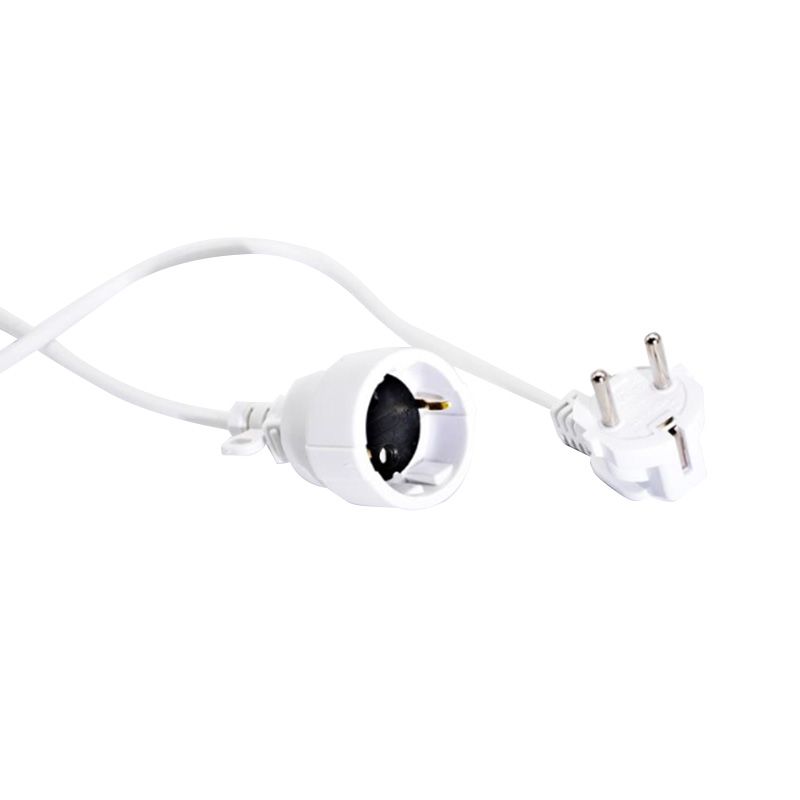
In every case, the outgoing cable should be routed to a central point and secured so that it cannot be pulled out of the strip. If the installation requires more cable length, a cable reel can manage the slack while providing additional sockets for temporary use.
Matching Configuration to Use Case
Use the table below as a checklist for the configuration you need before comparing individual models.
| Application | Recommended setup | Protection priorities |
|---|---|---|
| Home office desk | 3-4 outlets with 2 USB ports | Overload protection and individual switches |
| Kitchen island | 4-6 outlets with 2 USB ports | PC housing, overload protection, grounding |
| Meeting room / public space | 4-6 outlets, wide socket spacing | Individual switches, flame-retardant materials |
| Bedside table | 2 outlets with 2 USB ports | Independent switches for phone and lamp |
Keep in mind that each manufacturer builds models with different combinations of these features. The best unit for one surface may not be the best for another, because of the mounting depth and cutout dimensions.
A Practical Purchasing Sequence
Start with the surface, then move to the electrical load. Measure the available cutout space and the depth behind the mounting surface before opening any catalog. Next, determine the device load you expect in that location. Multiply the current of the largest device combination by the voltage to confirm the rated current of the strip. Only then compare the safety features: overload protection, independent switches, and housing material. If the unit passes these checks, consider the USB output last, since it is the feature that can be added later through a separate charger but cannot be upgraded once the unit is installed.
A built-in power strip gives you convenience, but it gives up flexibility. A 4-outlet strip with overload protection and independent switches is a strong starting point for most permanently installed positions. Once the cutout is made, changing the model means repairing the surface. The initial decision must be based on the electrical reality of the space, and you should carry out all checks before finalizing the purchase.
ПРОДУКЦИЯ
КОНТАКТНАЯ ИНФОРМАЦИЯ.
- +86-18758062352
- +86-0571-64701616
- [email protected]
- Китай, провинция Чжэцзян, город Ханчжоу, городок Цзяньдэ, улица Синьаньцзян, дорога Синьцюй, д.7


 ТОП
ТОП